
CPSTs know that children on aircraft are better protected from injury when riding in an approved CR due to the potential of turbulence or crashes. Recently, a new study identified an additional reason: in-flight medical emergencies. In particular, the researchers (three doctors from U.S. universities and hospitals) looked at the in-flight injuries (IFIs, typically trauma or burns) that children sustained. They found such incidents to be infrequent relative to the number of such events to all passengers, but not negligible. Their takeaway: The protection CRs can provide with respect to potential IFIs can expand their in-flight benefits beyond during takeoff, landing, and turbulence.
News
Car Seat Shopping Guide for Small and Premature Infants
Small babies and those with special needs due to prematurity or other medical conditions will not fit well in all car seats sold for newborns. Selection must consider both proper harness fit and the manufacturer’s lowest weight limit rating.
Read More from “Car Seat Shopping Guide for Small and Premature Infants”
LATCH-Related CR Recalls —ARCHIVE
Excerpted from the 2015 LATCH Manual
The following LATCH-related child restraint recalls are excerpted from the 2015 LATCH Manual* ((The most current LATCH Manual is the 2019 edition; outdated versions should not be used.)) and include only those CR recalls and consumer advisories that affect CRs that are expired as of January 2017. They were omitted from the 2017 and newer LATCH Manuals because the publisher does not want to imply that users should continue to use expired child restraints.
Retrofitting Tether Anchors
Still a Benefit to Child Safety
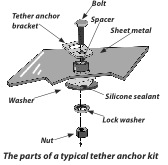
In preparation for the 2017 LATCH Manual* ((The most current LATCH Manual is the 2019 edition; outdated versions should not be used.)), SRN reviewed and updated the status of various aspects of retrofitting vehicles with tether anchors (TAs), leading to the following update report.
Read More from “Retrofitting Tether Anchors”
It’s Time to Think About Autonomous Vehicles
I’d have to have my head planted firmly in the sand if my initial skepticism about self-driving vehicles hasn’t budged over time. In a few short years, what has gone from bold predictions by certain tech giants has developed into mainstream acceptance. Target dates for various rollouts of autonomous vehicles seem right around the corner, rather than in some sci-fi future. In September, the DOT released safety guidelines for autonomous vehicle performance, including a model for state policies.
Read More from “It’s Time to Think About Autonomous Vehicles”
Steps for Addressing the Use of Inflatable Seat Belts (ISBs) With CRs
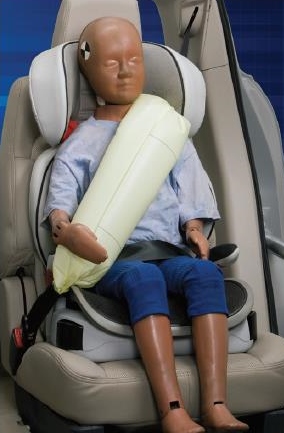
ISBs have been an available option in the outboard seating position of some Ford and Lincoln vehicles for the past five years. Over that time, the number of Ford/Lincoln models with this option has grown (see current list, at bottom of page) and now includes both two- and three-row vehicles.
Read More from “Steps for Addressing the Use of Inflatable Seat Belts (ISBs) With CRs”
Canada Weighs in Against Routine CR Screening of Preterm Infants
Based on a review of research related to the infant car seat challenge (ICSC), the Canadian Paediatric Society (CaPS, Canada’s version of the American Academy of Pediatrics, or AAP) has issued a revised position statement. It now says that insufficient evidence exists to recommend routine use of the ICSC as part of discharge procedures for preterm infants.
Read More from “Canada Weighs in Against Routine CR Screening of Preterm Infants”
Debate in the NICU Continues: What’s a CPST to Think When Doctors Disagree?
As readers know, I am not a doctor. Occasionally, though, as CPSTs we must consider certain medical conditions that influence the safety or children as vehicle passengers. Fortunately, there’s no need for CPSTs to hold a medical degree; simply follow the advice of doctors regarding the relevant symptoms of a diagnosis and how they might influence a child’s safety (either in a crash or during normal riding). To guide us, we are fortunate to have peer-reviewed scientific studies and policy statements from the medical community.
Read More from “Debate in the NICU Continues: What’s a CPST to Think When Doctors Disagree?”
Off-Road Vehicles Pose a Big Risk for Kids
SRN recently heard from Carma McKinnon, Idaho’s CPS coordinator located at Lemhi County Sheriff’s Department, regarding concerns over ATVs and UTVs. ATVs (all-terrain vehicles, aka quads) and UTVs (utility-task vehicles, aka side-by-sides, recreational off-road vehicles, or ROVs) are used by families across the country for both recreation and work purposes, but can be extremely dangerous to children.
McKinnon noted that ATVs and UTVs are very popular in her state, and this seems to be the case across the country, with the largest sales volumes found in rural areas, especially in the South and Midwest. Sales have grown substantially over the past 10 years. Based on data from the Motorcycle Industry Council and the Specialty Equipment Market Association, roughly 250,000 ATVs are sold in the U.S. each year. Sales of UTVs have been even hotter; this newer market entry has surpassed ATVs in sales, with around 400,000 currently sold per year. Sales of these vehicles fluctuate with the strength of the economy, so they may vary widely from year to year.
Nissan/Infiniti Issues Two Recalls Affecting Children
Nissan/Infiniti is recalling 3,177,645 cars in the U.S. due to continuing problems with the vehicles’ Occupant Protection Classification (OPC) software, which determines whether the front passenger air bag should deploy based on whether an occupant is present and that occupant’s size.
Read More from “Nissan/Infiniti Issues Two Recalls Affecting Children”