
In this recurring column, SRN shares vehicle-related information from Katrina Rose, SRN collaborator and vehicle liaison for the LATCH Manual. For this issue, Katrina responds to a question posed by SRN editor Denise Donaldson in reaction to a heartbreaking news story.
Question from Denise: I just read about a 20-year-old who died last October due to being trapped inside his Tesla when it caught on fire. Reading further, I find there have tragically been over a dozen other deaths like this, in which occupants couldn’t open a vehicle’s electronic doors because a crash or fire had caused a power failure. Is this something we need to look into to support family safety?
From Katrina: Yes, I’ve been hearing these reports, too, and think we should. As CPSTs, we’re very familiar with the flush electric-assist door handles on the outside of some cars, especially electric vehicles. However, the issue in these emergencies involves the interior release mechanisms—electronic buttons that won’t work when the power is off.
Sadly, although vehicles that have these electronic door buttons also have a backup mechanical (manual) release mechanism that occupants can use in an emergency, the occupants who died didn’t know about them. Few people do! As stated by one of the lawyers suing on behalf of the families of victims, these mechanical alternatives are often neither clearly marked nor intuitive to use.
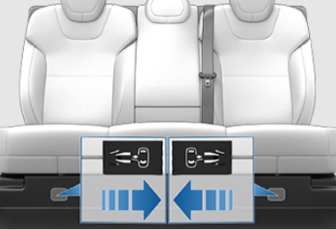
I’ve been looking into this, and I agree with that assessment. I’d go further and say that even the owner’s manuals for some vehicles do not adequately address how to use the mechanical release mechanisms. I’ve had more luck finding detailed information by referring to emergency response guides that NHTSA posts online for first responders.
These images from Tesla owner’s manuals show the very different mechanical release mechanisms that exist for the second row in Model S (above) and Model X (below). Neither is obvious nor intuitive.
While electronic door buttons are commonly found in vehicles from EV brands, like Tesla and Rivian, not every EV has them. And some models from other brands, like Acura, Audi, Cadillac, Honda, Lucid, and Volkswagen, also have electronic buttons. A car can have interior buttons even when it doesn’t have flush door handles, so that exterior feature can’t be considered a tell-tale sign.
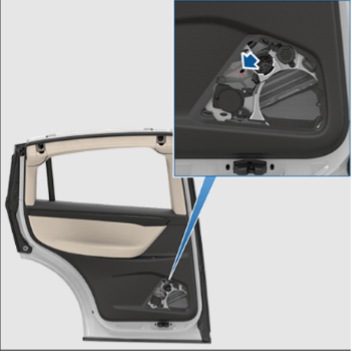
I’ve noted there’s wide variation in door-release designs, so knowing the specific instructions for one’s vehicle is important. In particular, the mechanisms in models by Tesla or Rivian differ dramatically from one another; mechanisms for the front and second rows also differ. In some models/model years, mechanical release is available only for the front doors or, when the rear child-lock function is on, the rear’s mechanical door release is thwarted. Rear seat occupants should understand that, in these cases, they’d need to exit through the front doors in an emergency. Some models cite the trunk as a viable emergency route option, using the interior trunk release that’s required by FMVSS 401.
Emergency Exit Resources for CPSTs
CPSTs are invited to use to a free resource from SRN for educating caregivers who own a vehicle with electronic door-release buttons. The resource advises techs to point caregivers to their manuals to learn about how to open doors in an emergency, along with detailed information about certain vehicles. Click here or look on this website under Resources/Tools for CPSTs, then scroll to “Mechanical Access to Door Buttons.”
Click here (or search “Break” on this site) to find an article that explains how to break window glass as an emergency exit alternative. When breaking automotive glass, it’s important to have the right tool and target the right type of glass (non-laminated).